
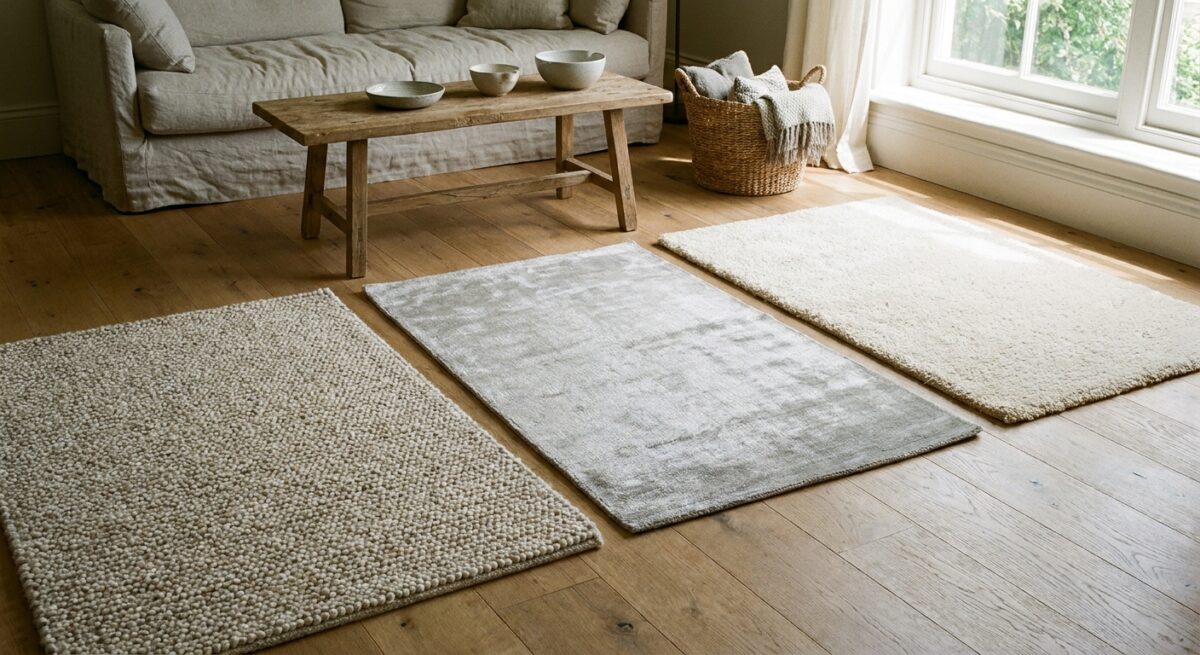
Buyers evaluating high-end floor coverings must understand how specific material compositions dictate long-term durability and maintenance requirements. Sarelli Textiles provides transparent material specifications for luxury fabrics, establishing a standard for evaluating textile performance. Carpet longevity depends entirely on whether the manufacturer selects wool, silk, or viscose yarns for the primary pile structure. Individual fibers react differently to friction, moisture, and compression based on distinct molecular properties.
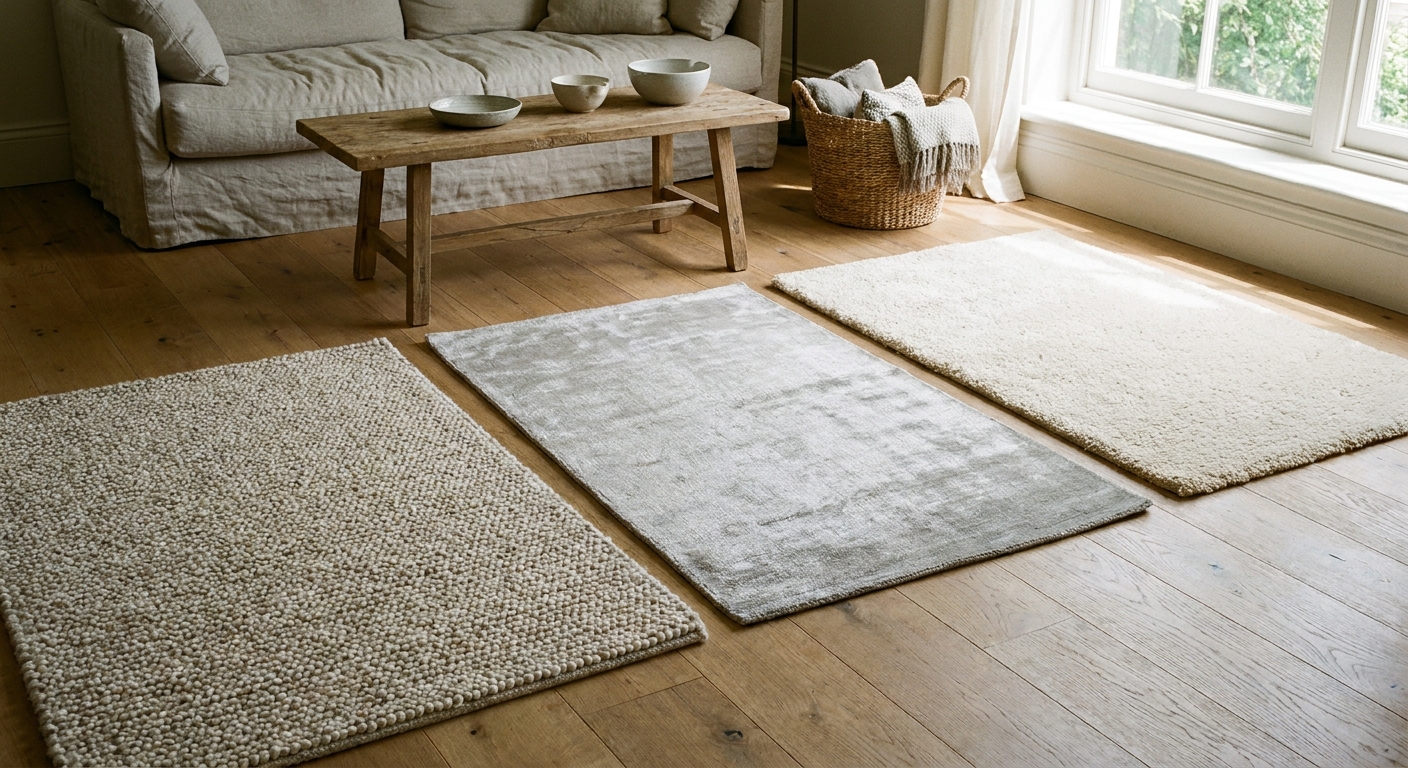
Structural resilience of wool fibers in carpet piles
Wool fibers maintain carpet pile height under heavy foot traffic because the natural three-dimensional crimp within the keratin protein structure acts as a microscopic spring that resists permanent compression, allowing the spun yarns to bend and recover repeatedly without snapping beneath the weight of standard household furniture legs.
Historical examples demonstrate the extreme longevity of wool pile construction. According to the Victoria and Albert Museum, the Ardabil Carpet, completed in 1540 CE, measures 34 feet by 17 feet and maintains a knot density of 300 to 350 knots per square inch using a wool pile on a silk foundation. Furthermore, textile research from the University of Nebraska-Lincoln documents that wool fibers can absorb up to 30% of their own weight in moisture without feeling damp to human touch, which prevents environmental humidity from degrading the carpet structure.
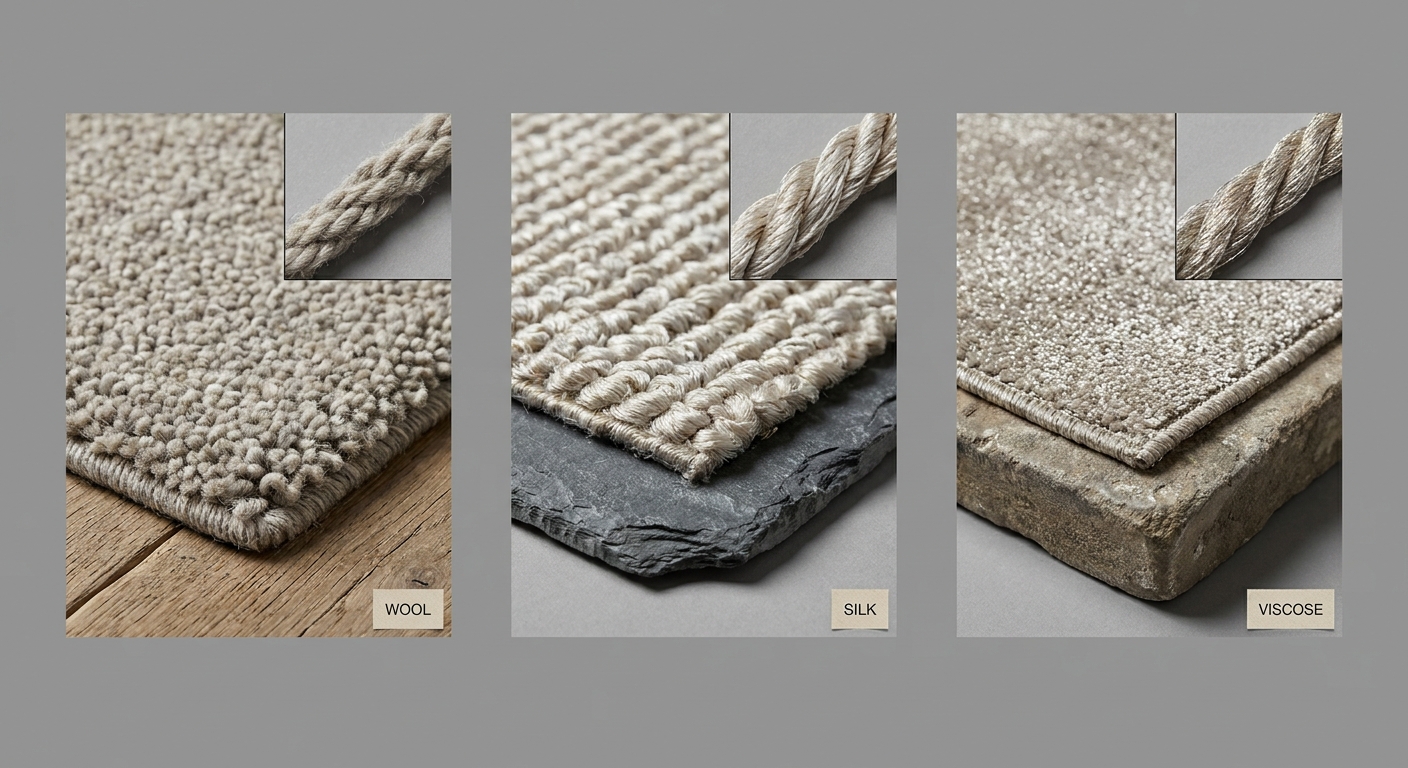
Carpet buyers select wool piles for several structural advantages:
- Inherent flame resistance due to high nitrogen and water content.
- Acoustic insulation properties that dampen ambient room noise.
- Thermal regulation capabilities that stabilize floor temperatures.
Tensile strength and mechanical wear of silk piles
Silk fibers provide exceptional visual clarity and allow weavers to achieve extremely high knot densities in luxury carpets, but the delicate fibroin protein structure offers substantially lower resistance to mechanical abrasion than wool, causing the fine filaments to break rapidly under the repetitive friction of daily walking.
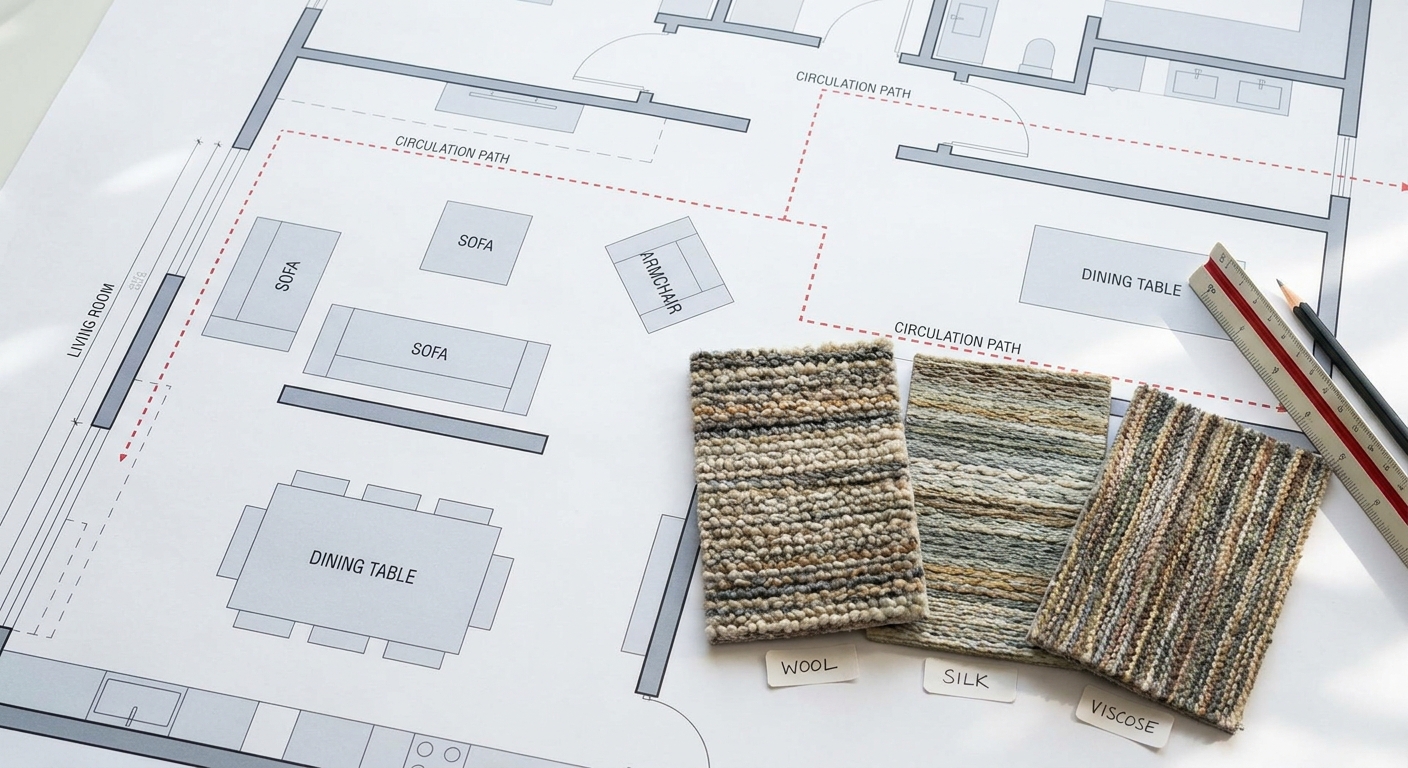
Carpet weavers use silk primarily for intricate design highlights or low-traffic wall hangings because heavy foot traffic causes the fine filaments to shear. The Encyclopedia Britannica states that raw silk consists of exactly 75 to 80% fibroin protein and 20 to 25% sericin gum, providing high tensile strength for tight warp foundations but lower mechanical abrasion resistance for soft pile surfaces. High-quality carpets from regions like Kashan, Qum, and Isfahan often feature all-silk piles, but owners must place such carpets in protected areas to prevent rapid pile degradation.
Moisture regain and pile crushing in viscose carpets
Viscose fibers flatten permanently under moderate foot traffic because the regenerated cellulose structure lacks the natural elasticity required for physical recovery, while high moisture absorption rates cause the semi-synthetic yarns to lose significant structural integrity when exposed to basic household liquid spills or standard cleaning methods.
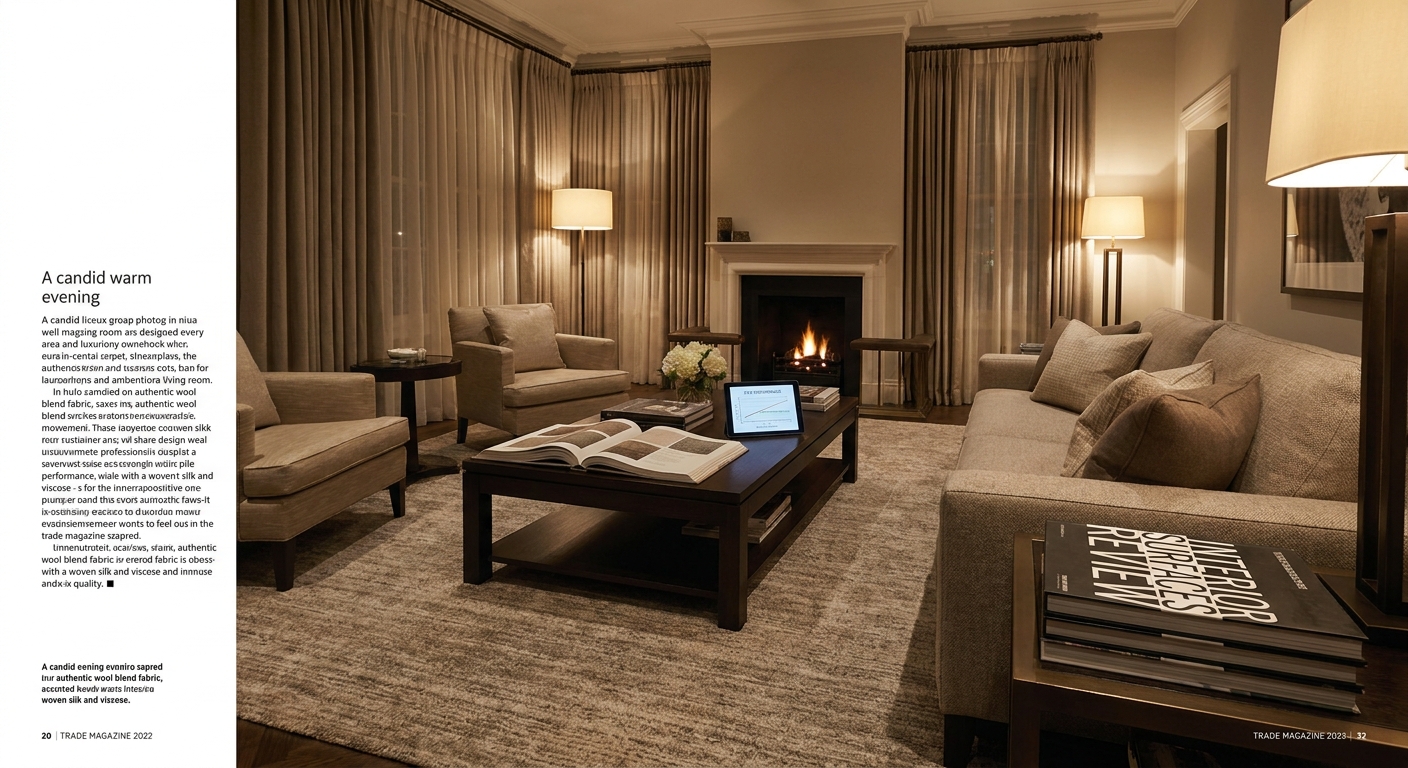
Manufacturers create viscose by dissolving wood pulp in alkali solutions and extruding the cellulose into an acid bath. The resulting semi-synthetic fibers mimic the sheen of natural silk at a lower cost. However, the Encyclopedia Britannica documents that viscose rayon fibers lose 40 to 50% of their tensile strength when exposed to water, making the regenerated cellulose structure highly susceptible to permanent pile crushing. Textile conservation guidelines emphasize strict maintenance protocols for regenerated cellulose.
Viscose fibers experience a 50% drop in tensile strength when exposed to water, requiring specialized dry-cleaning solvents rather than traditional hot water extraction.
Cleaning professionals cannot use standard hot water extraction methods on viscose carpets because the moisture causes the cellulose fibers to distort, mat together, and dry in a crushed position.
Comparative performance metrics of carpet fibers
| Fiber Type | Primary Composition | Pile Resilience | Moisture Tolerance |
|---|---|---|---|
| Wool | Keratin protein with natural crimp | High recovery under weight | Absorbs up to 30% of weight |
| Silk | 75 to 80% fibroin protein | Low resistance to abrasion | Moderate structural stability |
| Viscose | Regenerated cellulose | Permanent crushing risk | Loses 50% tensile strength when wet |
Related reading on this site
Readers comparing planning rules can also review Meet Our Team for adjacent context on the same site.
Material and proportion decisions connect closely with About Us, which gives readers another local reference point.